A Fortville Installer's Checklist for Caring for Window Treatments

Window treatments do not need much upkeep, but the little upkeep they do need matters, and doing it wrong can cause more damage than skipping it entirely. Here is what actually keeps window coverings looking right in a Fortville home over the years.
Routine Dusting for Every Kind of Covering
The mistake we see constantly in Fortville homes is dusting blinds with the slats open instead of closed. Open slats let dust fall straight through to the next slat down, so you end up redistributing dust instead of removing it. Close the blind first, then wipe.
Another one: using a feather duster on aluminum blinds and calling it done. A feather duster is genuinely useful on wood and faux wood, since the feathers get between slats and use static to lift dust without scratching a finish, but on cellular or fabric shades it barely touches the dust sitting in a fold or a pleat.
We also see people vacuum fabric shades on full suction, which can pull at the fabric weave over time, especially near a hem or a seam. Low suction with a brush attachment does the job without stressing the material.
Cleaning Fabric Shades and Drapery
Most fabric shades and drapery in a Fortville home are spot-clean only, not something you machine wash or fully submerge. The pleats and hems, along with any lining sewn in, can shrink or pull unevenly when fully wet, even if the face fabric itself would survive a wash fine on its own.
For a spot, use a mild soap in cold water and a soft cloth, blot rather than rub, and work from the outer edge of the mark inward so it does not spread wider. Test on a hidden spot first, the bottom hem or a fold that stays out of sight, to make sure the fabric and any dye hold up.
Blackout linings need extra caution. The foam layer bonded to some blackout linings can crack or peel if it gets scrubbed or soaked, so a light touch on the face fabric only, with no real effort on the lining itself, is the safer approach.
Handling Stains and Spots Without Making Them Worse
Ask what the fabric or finish actually is before treating a stain in a Fortville home, since the right approach for a cotton-blend fabric shade is not the right approach for real wood or for a blackout-lined drapery panel. Guessing is how a stain becomes a repair.
Ask whether a specific cleaner is safe for that material before reaching for whatever is under the sink. Bleach and ammonia-based cleaners were not made with fabric shades or wood finishes in mind, even when a label says "safe for most surfaces."
And if a stain has already dried in or a first attempt did not fully lift it, ask before trying something stronger. A second, more aggressive attempt on the wrong material is usually what turns a stain into a permanent mark.
Caring for Cords and Motors
A busy family room in a Fortville home, with cords getting handled by kids multiple times a day, will show wear on a cord lock long before a rarely used guest bedroom does, so it is worth checking the mechanism in high-traffic rooms more often than the rest of the house.
A nursery or a young child's room should have corded shades limited or removed entirely in favor of cordless or motorized options, and any cord that is present needs a cleat or tension device mounted and actually used, not left loose in a drawer.
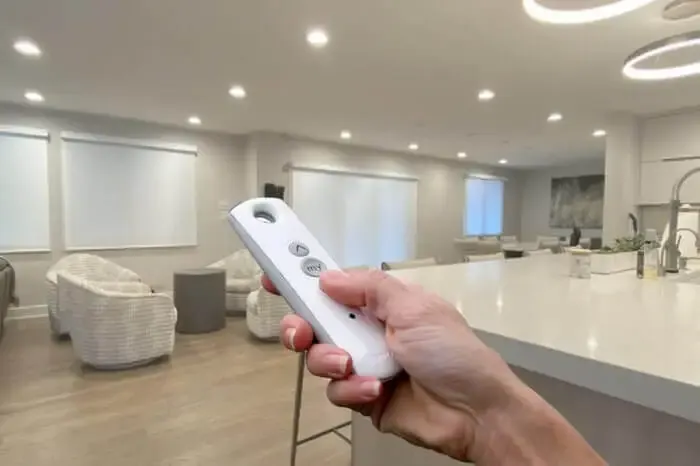
In a media room or anywhere motorized shades run on a schedule multiple times a day, keep the track or channel around the mechanism free of dust, since debris in that path is more likely to cause binding in a shade that moves on its own several times daily than one raised and lowered by hand just once or twice.
If a window treatment in your home already looks tired despite regular care, or you are not sure what a specific fabric or finish can handle, it is worth asking rather than guessing. A free in-home measure is also a good time to have someone look at what you already own.
Cleaning Wood and Aluminum Blinds
Aluminum mini blinds are the cheapest to maintain long-term in a Fortville home, since they can handle a real wash without worrying about warping or finish damage, and a full soak in a tub with mild soap resets them completely if they have gotten heavily dusty.
Real wood costs more upfront and it costs more in care too, since it cannot be washed the way aluminum can. A damp cloth is about the limit, and pushing past that risks a repair or a refinish down the road that costs far more than the dusting would have.
Faux wood sits in between. It handles a damp cloth and mild soap without the warping risk of real wood, which is part of why it holds up well in humid rooms where real wood would be a harder sell over the long run.
Frequently Asked Questions
What is the safest way to remove a fresh stain?
Blot it, do not rub it. Rubbing pushes whatever spilled deeper into the fabric and spreads it wider than the original mark. A mild soap in cold water, applied gently and blotted from the outside of the stain inward, handles most fresh spots without making them worse.
Can I use a magic eraser on my blinds?
Be careful with it on a painted or coated wood or faux wood finish. A magic eraser is a mild abrasive, and it can scuff the surface in a way that shows up worse than the mark it was meant to remove. It is safer on some surfaces than others, so test a hidden spot first.
My shade cord keeps slipping. Is that normal?
It usually means the cord lock, the small mechanism that holds the shade at height, has worn out. That is a simple, inexpensive part to have serviced rather than a reason to replace the whole shade, and it is worth addressing before propping the shade in place becomes the everyday workaround.
 Battery or Hardwired: Powering Smart Shades in Fortville
 How Custom Drapery Gets Measured and Made Right in Fortville