What a Proper Measure Catches Before You Buy in Fortville
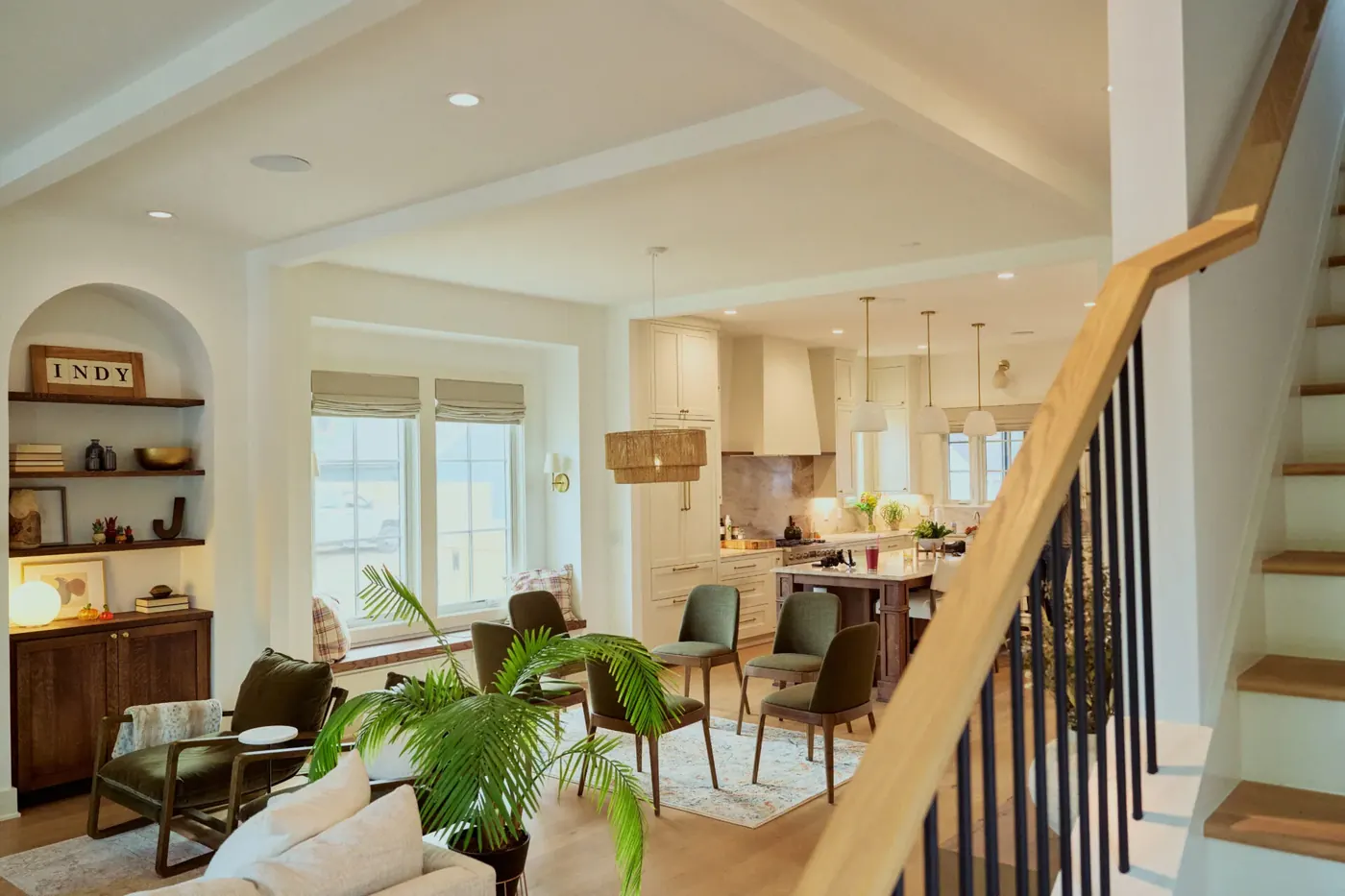
Plenty of advice about window coverings treats stock product as something to avoid. That is not honest. Stock is well made for what it is, and in some rooms it is clearly the right purchase. The trouble starts when a product built to a fixed size meets an opening that is not one. This is a room by room guide to where each answer belongs in a Fortville house.
What Happens When a Stock Blind Gets Cut to Fit
The price gap between stock and custom starts to make sense once you understand what a cut does to a blind. Stock ships in fixed sizes, and a store's saw brings it down to the width you need, usually to the nearest eighth of an inch. That service is free or nearly free, part of why the sticker price looks so good.
What it costs instead shows up later, mechanically. The headrail, the tilt rod, the bottom rail and every slat all get shortened, but the ladder strings that hold the slats level do not move, since they were spaced for the original, wider blind. On a blind that lost several inches, a length of slat near each end can hang past the outermost ladder with nothing supporting it.
That is the real cause of the sag on the ends of an older cut down blind, and it is not a manufacturing defect. It is geometry that changed after assembly. Roller shades carry a version of the same risk: a tube cut out of square can make the shade telescope, walking sideways against the bracket with every cycle.
Where Stock Makes Sense and Where It Doesn't
Stock is not a lesser product built down to a price. It has one fixed assumption built into it: that a Fortville opening matches a size somebody chose in advance. Nationally, stock window coverings run roughly $60 to $600 a window, while custom, measured in the home and installed, runs roughly $250 to $2,600. Where that assumption holds, stock is a genuinely good buy.
It holds up in a garage, a laundry room, a basement, an unused guest room, or a rental between tenants. Those spaces share low cycle count: a blind adjusted twice a season never gets worked hard enough to notice that its ladder strings were spaced for a different width.
The assumption breaks down on wide openings, which need a heavier headrail or a center support most stock lines do not offer, and on tall openings, where the usual fix is letting excess pile on the sill. Out of square openings and bedrooms that need real darkness belong on that list too, and so does anything motorized, since a motor has to be matched to a shade rather than bolted on afterward.
Why Openings Are Rarely Perfectly Square
The second mistake is skipping the diagonal check because the opening looks square to the eye. It rarely is, not after a house has stood for a couple of decades. Framing settles, and the gap between two diagonal measurements is usually where that shows up first, long before it is visible without a tape measure.
Ordering a stock rectangle for an opening that has not been checked this way is a coin flip. Size it generously and it may bind at the narrow point every time it operates. Size it tighter and a wedge of daylight shows along one side once it is hung, wider at one end than the other, with no way to fix it after the cut.
This mistake shows up constantly in older Fortville homes and in additions, and it is entirely avoidable. A five minute diagonal check before ordering anything, stock or custom, tells you whether you are dealing with a normal opening or one that needs a product built to its actual shape.
What a Proper Measure Actually Checks
Whichever way a room goes, stock or custom, it deserves a real measure rather than one number scrawled on a phone. Width gets taken at both ends of the opening and at the middle, and the smallest number matters for an inside mount. Height gets taken at both ends and at the center, and the shortest one governs there too.
Both diagonals get checked against each other to catch an out of square opening, and the flat depth inside the opening gets checked against whatever minimum the product needs for an inside mount. Skipping that last check is how people end up with a blind that will not sit flush.
For a custom order in Fortville, a professional does all of this and stands behind the numbers. For a stock purchase, the same checks take about five minutes with a tape measure and prevent most of the returns that make stock feel like a bad experience. A guest room forgives a small error in a way a formal dining room never will.
Warranty, Remakes and Who Pays If It's Wrong
A measure creates accountability, which is really what it is selling along with the product. When a company takes the numbers and orders to them, a remake caused by a bad number is their mistake to fix, not the homeowner's. That is worth stating plainly before signing anything, since it rarely gets said out loud otherwise.
Stock skips that accountability by design. A blind cut at a store to a number someone else wrote down is generally a final sale, so it is worth asking about the return policy before the saw runs rather than assuming there is a safety net.
The paperwork matters as much as the measure itself. Get the mount type and the lift type for each opening written down, which IN law already requires for residential jobs over $150 under IC 24-5-11 in the form of a written contract with a scope and a total price. Lead time runs roughly two to five weeks from that order to the install, the tradeoff for a product built around a real measure instead of a shelf size.
Pay custom pricing where a window gets used daily and where the fit is visible. Buy stock where a blind gets touched twice a season. The remake risk is the detail people miss: a mis cut stock blind is your loss, while a bad number on a custom order belongs to the company that measured. Fortville Window Treatments covers Fortville and IN communities, insured and bonded, and prices both options honestly. Reach us at (317) 999-5154.
Frequently Asked Questions
How long does custom take compared to buying stock today?
Custom runs roughly two to five weeks from order to install, since the product gets built to your finished dimensions after you order it. Stock can go home the same visit if the size is already on the shelf. That speed difference is genuinely the strongest argument for stock, particularly if a house is being listed or a rental is turning over between tenants.
Should I still get a professional measure if I'm buying stock?
It helps to at least measure carefully yourself. Take width at both ends of the opening and at the middle, and use the smallest number. Take height at both ends and the center, and use the shortest. Check both diagonals for square, and check the flat depth inside the opening against the minimum the product needs for an inside mount. Those checks take a few minutes and prevent most returns.
What's the actual cost difference between stock and custom?
Nationally, stock window coverings run roughly $60 to $600 a window, while custom, measured in the home and installed, runs roughly $250 to $2,600. The gap covers the measure, manufacturing to your exact size, installation, and having someone to call if a mechanism fails down the road. Size, fabric and mount type move both ranges quite a bit.
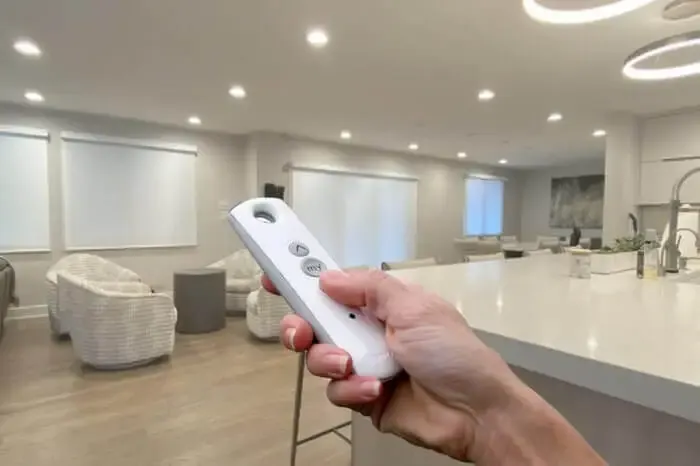 Battery or Hardwired: Powering Smart Shades in Fortville
 How Custom Drapery Gets Measured and Made Right in Fortville
 Window Treatments for a New Fortville Build: A Practical Guide