Healthcare Window Treatments for Fortville, IN
Cleanable, cordless, documented for the submittal
The questions below are the ones that come up during measures for this product. They're answered here so you can think about them before somebody is standing in your room waiting for a decision.
- Service: Healthcare Window Treatments for Fortville homeowners
- Service area: Fortville, IN and surrounding areas Honest structure: the measure happens on a normal appointment, the factory takes two to five weeks to build your order, and then we install. Service work on something already hanging moves much faster because nothing needs fabricating.
- Insured and bonded
- Serving Fortville, IN since 2008
Expert Healthcare Window Treatments for Fortville Homes
Clinical scope in Fortville is suite scale, and specifying it as though it were a hospital floor wastes money. The town's professional space sits along SR 234, Fortville Pike and the E 96th and E 101st Street corridors, in the Main Street and Broadway block, and around Deaton's Business Park on the west side. With an ACS population of 4,976 and a December 2025 estimate above 6,000, a median age of 36.0 and 2.7 people per household, the demand here is family practice, dental, therapy and small specialist space rather than acute care. That means exam rooms, a waiting area and a handful of offices, usually on one level, with a fit out measured in tens of openings.
Three requirements should be settled before anything is priced. Ask for the manufacturer's flame propagation test documentation on every fabric, typically NFPA 701 test data, and put it in the submittal for your own authority having jurisdiction to review rather than relying on anybody's assurance. Specify cordless or motorized operation throughout, with no exceptions for cost in patient accessible areas. And specify surfaces that survive the disinfectant the facility actually uses, which is a different question from whether a fabric is described as wipeable. We ask which product your staff cleans with and match the specification to it.
Signs You Need Healthcare Window Treatments
If you notice any of these in your Fortville home, it is worth booking a measure. None of it is urgent, and none of it fixes itself either.
Patient room blinds have cords within reach of a bed
Blinds collect dust on a ledge above the bed
Nurse station monitors wash out every afternoon
Waiting room glare drives people to other seats
Nobody can produce fire test documentation on file
Existing fabric cannot take the cleaning protocol
An imaging room needs shades and nobody asked MR safety
Bleach has discolored the faces on one unit
A ground floor exam room keeps the blinds shut all day
Damaged shades sit for weeks waiting on an order
How Fortville Window Treatments Handles Healthcare Window Treatments
Every job follows the same five-step process. Transparent, thorough, and done right the first time.
Scope walked with facilities and infection prevention
Darkening assemblies specified where required
Flame test method matched to each product
Imaging areas cleared with MR safety
Control height set from the bed
Healthcare Window Treatments in Fortville
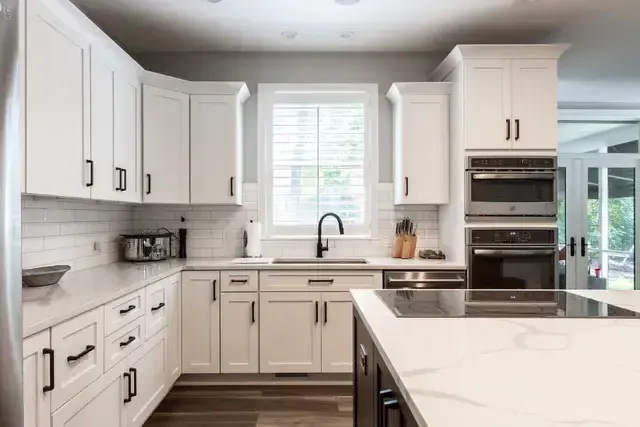
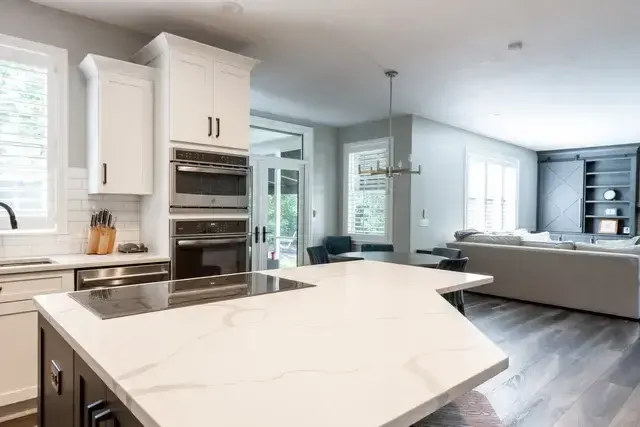
Photographs from real healthcare window treatments jobs completed by our crew in Fortville and surrounding areas.
What Healthcare Window Treatments Includes
Every Fortville job is documented item by item. Here is what the crew covers.
Scope walked with facilities, and with infection prevention where the areas served include clinical space
Every room type classified before fabric selection, since a patient room, an imaging suite and a waiting area want different products
Written direction obtained from the authority having jurisdiction on what this occupancy actually requires, instead of an assumption carried over from another facility
Flame propagation test documentation obtained for every fabric where the occupancy requires it, and placed in the submittal package
Cleanable non-porous surfaces specified in clinical areas so treatments survive the cleaning protocol already in use
Cleaning agents and dwell times confirmed against the manufacturer's own guidance rather than assumed compatible
Cordless operation specified as the default across patient-accessible areas, with no accessible operating cord anywhere in reach
Behavioral health areas identified early, because hardware there is a specification question rather than a product preference
Imaging, sleep and procedure rooms flagged for true darkness, which needs a pocket and side channels rather than a dark fabric
Patient privacy and daylight balanced per room, since daylight access matters to recovery and so does not being seen from a corridor
Control reach and operating force checked against ADA sections 308 and 309.4 wherever the space requires it
Motorization specified where reach, force or infection control rules out a manual control
Mounting details drawn so there are no fabric-covered ledges collecting dust above a patient bed
Infection control risk requirements incorporated into the install method, including containment and daily cleanup
Phasing built around clinical operations, unit by unit and room by room, with dates agreed with nurse management
Attic stock agreed at contract so a soiled or damaged unit is swapped rather than waited on
Delivery commitments made in writing at release and revised in writing the same day a factory date changes
Closeout package handed over with fabric identification, cleaning guidance, the fire test documentation and the shade schedule
What Healthcare Window Treatments Cost in Fortville
Healthcare work is quoted per project from a measured opening schedule, because the room types inside one building price very differently from each other. The national ranges to anchor against are roughly $250 to $2,600 per window for custom-fabricated shades and roughly $300 to $1,500 per window installed for motorized product. Those are national category figures and they are not a bid for a facility in Fortville. What pushes healthcare above a plain office scope is documentation and specification: flame propagation test paperwork in the submittal, cleanable fabrics, cordless or motorized operation throughout, and true darkness assemblies in imaging and sleep rooms. Phasing around clinical operations is its own line. Fortville Window Treatments bids Hancock County facilities from the schedule with the room-type requirements written into it.
How Healthcare Window Treatments Differ by Product
Every product in this trade behaves differently in a room. Here is what that means for this work.
Flame propagation tested fabrics: Textiles tested to the recognized flame propagation standard with the documentation available for submittal. In healthcare occupancies this is where specification starts, and the paperwork matters as much as the fabric, because review rejects an undocumented claim.
Wipeable non-porous faces: Vinyl-faced or coated fabrics with a closed surface that takes repeated cleaning without breaking down. Confirm the chemistry: some facility disinfectants degrade coatings over time, and the manufacturer publishes what their fabric tolerates.
Cordless lift systems: No accessible operating cord at any point in a patient-accessible space. It's the correct default in clinical areas, and it limits practical size, so past a certain shade weight the honest answer becomes a motor rather than a stronger spring.
Motorized operation with keypad: Motors and fixed wall controls where reach, operating force or infection control rules out anything hand-operated at the opening. It also lets a patient adjust daylight without a staff member crossing the room to do it.
Blackout assembly for imaging and sleep rooms: A darkening fabric with a light-blocking pocket at the header and channels at the jambs. In a sleep study or a procedure room, dim is a failure condition. The assembly is what produces darkness, not the fabric on its own.
Dual roller for patient rooms: A screen for the daytime and a darkening fabric for rest, on one bracket set. It gives a patient real control over their own room across a whole day rather than a single choice between glare and a dark box.
Cassette closures: An enclosed head detail rather than an open roll with exposed brackets. In clinical space it matters twice over: it looks finished, and it removes a horizontal ledge above the bed where dust would otherwise collect.
Behavioral health hardware: Where a unit serves behavioral health, hardware selection is a clinical specification decision made with the facility, not something a window covering vendor should decide alone. We build to the specification the facility and its consultants set.
Solar screens for staff and waiting areas: Glare control at nurse stations, waiting rooms and administrative space, specified by elevation the same way an office would be. Monitors are everywhere in a modern facility, and the screens people read are the test.
Cleanable vertical treatments: Where a full-height opening or a patio door exists in a rehabilitation or long-term care setting, individually replaceable vanes in a wipeable material keep one damaged element from becoming a whole-unit reorder.
Healthcare Window Treatments FAQ
Questions we hear most often from Fortville homeowners considering healthcare window treatments.
Healthcare Window Treatments Across Fortville
We measure and install in every one of these Fortville neighborhoods. Each has its own page with the build eras, window conditions and mounting notes for that section.
- Healthcare Window Treatments in The Historic Core
- Healthcare Window Treatments in The State Street grid
- Healthcare Window Treatments in Beyers Estates
- Healthcare Window Treatments in Mt. Vernon North
- Healthcare Window Treatments in Blossom Trace
- Healthcare Window Treatments in The Geist facing plats
- Healthcare Window Treatments in Calumet Farms and the equestrian streets
- Healthcare Window Treatments in Nestledown Farms and the farm named streets
- Healthcare Window Treatments in The Vermillion, Sedalia and Gallatin streets
- Healthcare Window Treatments in Orchard Drive, Spencer Boulevard and Crossley Street
Other Window Treatment Services in Fortville
Fortville Window Treatments handles the full scope of window treatment work. Explore our other services below.
Schedule Your Free In-Home Measure in Fortville
Reach Us Directly
Our team prioritizes scheduled measures and service calls, and books in-home measures during business hours.
Ready to Book Your Measure?
Call us to set up an in-home measure, or to ask about a treatment that has stopped working. We will talk it through on the phone first.