Cellular Shades

Cellular Shades Across Fortville, IN

The one with published DOE energy testing

Call (317) 999-5154Get Free Quote
Quick Answer

A quick summary before the details: this is a made-to-order product, measured in the home and built to your numbers. The answers here explain what that means for pricing, timing and what happens if something fails.

  • Service: Cellular Shades for Fortville homeowners
  • Service area: Fortville, IN and surrounding areas
  • Realistic sequence: appointment for the measure, a written specification, then fabrication of two to five weeks, then install. None of it needs rushing, and pushing the factory is where mistakes on custom sizes come from.
  • Insured and bonded
  • Serving Fortville, IN since 2008
Cellular Shades Services

Expert Cellular Shades for Fortville Homes

Cellular is the product with actual published energy testing behind it, and Fortville's housing stock is where that matters most in Hancock County. 48.4% of the town's 1,935 units were built before 1980, a share far above McCordsville's 13.5%, and those houses were built to a different standard of comfort than anything going up today. The 288 pre-1940 houses in the 1849 plat and the 649 units from 1940 to 1979 in the State Street grid both take a real winter load, with January averaging a 36.1 degree high and a 20.9 degree low. A honeycomb cell holds still air against the glass in a way no slat product does.

The published number needs its context carried along with it. In testing by DOE and Oak Ridge National Laboratory, cellular shades cut heating energy by as much as 20 percent, and as much as 15 percent of total heating and cooling energy, measured against a bare window. That comparison is with bare glass under test conditions, not with whatever hangs on your windows today, and nobody should be turning it into a dollar figure for a Fortville house. An inside mount also leaks air at both sides unless you add side channels, and those need depth the 1940s and 1950s openings in the State Street grid frequently don't have. The folded stack at the head takes real glass on a short opening too.

When to Call

Signs You Need Cellular Shades

If you notice any of these in your Fortville home, it is worth booking a measure. None of it is urgent, and none of it fixes itself either.

The old shade sags in the middle when raised

The west bedroom is unusable by late afternoon

You feel a draft standing near the glass

A guest room doubles as an office and fails both

One room runs cold no matter the thermostat

A bathroom needs light and privacy at once

Arched windows have never had anything on them

A patio slider still has hard vertical vanes

Whites in one room no longer match each other

Lift cords have frayed inside the cells

Our Process

How Fortville Window Treatments Handles Cellular Shades

Every job follows the same five-step process. Transparent, thorough, and done right the first time.

1

Elevations ranked by exposure

2

Three widths, three heights

3

Diagonal square check

4

Single or double cell chosen

5

Custom fabrication, two to five weeks

Real Project Photos

Cellular Shades in Fortville

Photographs from real cellular shades jobs completed by our crew in Fortville and surrounding areas.
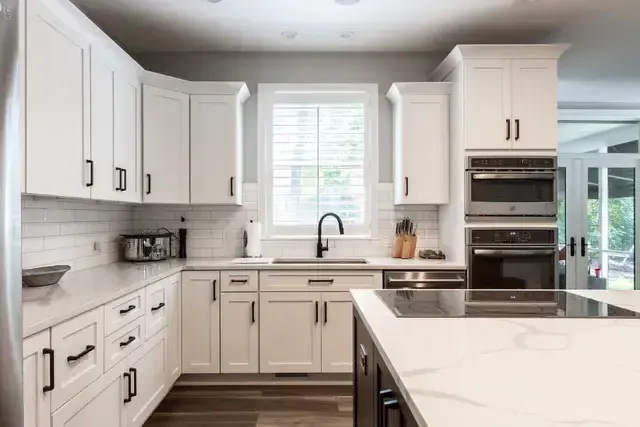
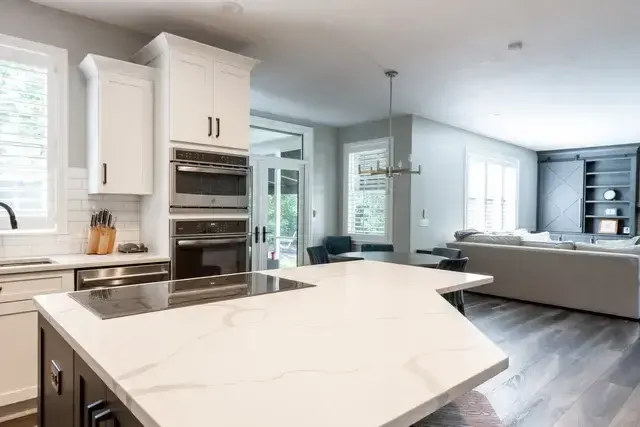
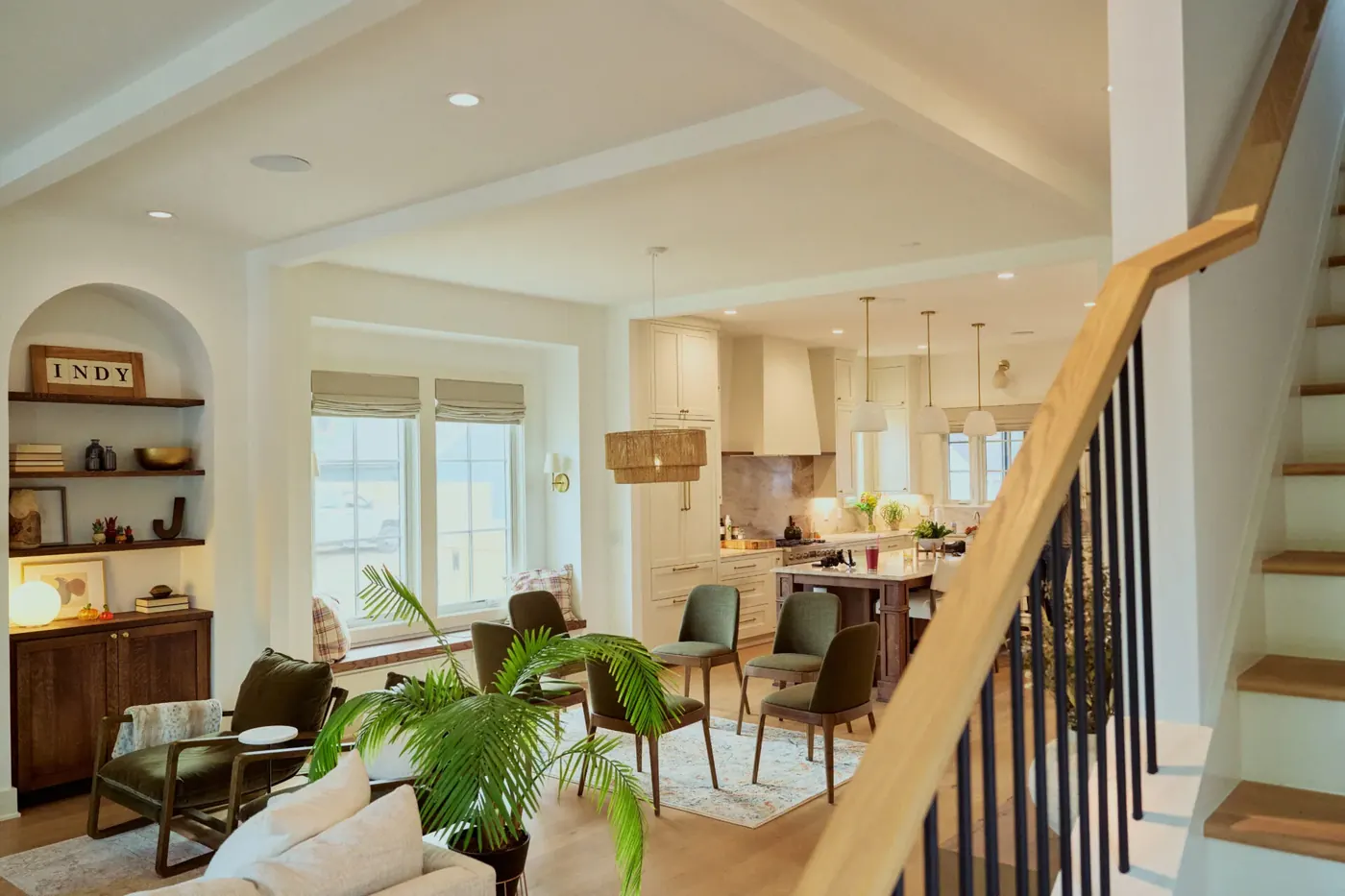
Custom shades measured and installed in FortvillePlantation shutters fitted to a Fortville windowCellular shades in a Fortville living room
Scope of Work

What Cellular Shades Includes

Every Fortville job is documented item by item. Here is what the crew covers.

Room-by-room walk to decide where the energy case is real and where it isn't

Three widths and three heights per opening with a diagonal square check

Mounting depth measured so the headrail sits fully inside the opening where an inside mount is wanted

Single cell or double cell specified per room rather than picked once for the whole house

Cell size chosen against the opening, smaller cells on short windows so the stack stays in proportion

Light filtering, room darkening and blackout fabrics separated in writing before anything is ordered

Top-down bottom-up specified where street privacy and daylight both matter at the same window

Cordless lift specified as the default in bedrooms, nurseries and stairwells

Continuous cord loop with a tensioner used only where weight or height makes cordless impractical

Products specified to conform to ANSI/WCMA A100.1-2022 for cord access

Winter condensation risk on tight inside mounts explained at the measure

Headrail clearance from the glass checked so the shade isn't sealed against a cold surface

Light gap per side disclosed for inside mounts and written on the paperwork

Vertical cellular units drawn where the opening is a slider rather than a window

Specialty shapes measured with a template where an opening is arched or angled

Wide spans reviewed for headrail deflection and split into two units where that's the right call

Bottom rail leveling and full travel tested at every unit on install day

Old product removed, brackets pulled and the wall left ready for the new mount

Pricing

What Cellular Shades Cost in Fortville

National category numbers put stock shades around $60 to $600 per window and custom-fabricated shades around $250 to $2,600 per window. They're national ranges, published for the category, and they aren't a quote for any address in Fortville. Cellular sits across a wide part of that band because the construction varies so much. A single cell light filtering shade on a small opening is near the bottom. A double cell blackout shade with top-down bottom-up on a tall window is near the top, and it should be, since you're paying for two lift systems and a heavier fabric. Size, cell count, fabric opacity and lift type are the four levers. Fortville Window Treatments prices from measured openings in Hancock County, not from a per-window average.

By Product

How Cellular Shades Differ by Product

Every product in this trade behaves differently in a room. Here is what that means for this work.

Single cell, 3/8 inch: The small cell keeps the stack tight at the top of the window, which matters on short openings and transoms. Specify it where you want the shade nearly gone when it's raised and the room isn't an energy problem.

Single cell, 9/16 inch: The everyday size. It gives you real cell depth without a heavy stack, and it covers most bedrooms, living rooms and offices. This is the default we start from unless a room argues for something else.

Double cell, 3/8 inch: Two rows of cells means two pockets of trapped air across the same opening. Choose it on the elevations that get hit hardest, which around here usually means the north wall in January and the west wall in July.

Double cell, 3/4 inch: The deepest construction we normally hang. It stacks taller and costs more, so we reserve it for tall windows on hard elevations where the energy argument does the work of justifying it.

Light filtering fabric: Daylight comes through diffused and the room stays bright without direct glare. It's the right call in kitchens, living rooms and any space where you want softness rather than darkness.

Room darkening fabric: A denser fabric, sometimes with a liner inside the cell, that cuts most of the light through the face. Bedrooms are the obvious use. Understand that an inside mount still passes light at the edges.

Blackout fabric: The heaviest option, with a light-blocking liner in the cell. Pair it with an outside mount or side tracks if the goal is a genuinely dark room rather than a dim one. On its own it darkens, it doesn't seal.

Top-down bottom-up: Two rails on independent controls, so you can drop the top for daylight while the bottom stays up for privacy. It earns its cost in bathrooms and in any room facing a sidewalk or a close neighbor.

Cordless lift: No lift cord anywhere on the shade. It's what we put in kids' rooms by default, and it's the cleanest thing to operate on a shade you touch every day. Wide units want a hand at each end of the rail.

Vertical cellular: The same honeycomb fabric running on a track for a patio slider, stacking to one side. It gives a sliding opening the insulating construction that a vertical blind can't, and it looks like fabric rather than hardware.

Light Control

See What Each Fabric Does To The Light

Pick a fabric below and the window updates. It's a drawing rather than a photograph, so read it as a rough guide to what each family does in a Fortville room, and to what it doesn't do.

Fabric type

Sheer, 10 percent openness

Ten percent of the weave is open, so you keep the view and most of the daylight. Glare drops a little. After dark, once your lamps are on, someone outside can read shapes through it, which is why this belongs on a view window rather than a bedroom.

Openness factor is printed on the fabric card, so you can compare one line against another before you order anything.

Keeps the viewNot private after dark

Solar, 5 percent openness

The usual pick for a west window or a covered porch. You can still read the yard through it, glare comes down noticeably, and the fabric intercepts a good share of the sun before it reaches you at four in the afternoon.

It also cuts the UV landing on floors and furniture. NFRC puts UV at roughly 40 to 60 percent of fading damage, so this slows fading rather than stopping it.

View and glare controlSlows fading

Solar, 3 percent openness

A tighter weave. The room goes dimmer and the view drops back to an outline. Choose it where the sun is the problem and the view is second, which around here usually means a west wall in July. That's a common call on this side of Indianapolis.

Openness affects how much you see out, not how private you are. A 3 percent fabric still shows silhouettes at night.

View becomes an outlineStrong glare control

Solar, 1 percent openness

Close to a solid fabric with a little view left in it. This is the strongest glare control in the solar family.

The trade is that it darkens the room on a gray January day too. Indianapolis averages a January high near 36F and the light is flat, so think about how the room reads in both seasons before you commit.

Darkest solar optionDim on gray days

Light filtering

No view through it. Daylight comes through the face diffused, so the room stays bright without a hot spot across the television or the kitchen island. This is the default for living spaces.

It isn't private in reverse at night. With the lamps on and the sun down, silhouettes still show.

No view through itBright without the glare

Room darkening

A denser fabric, usually with a liner behind it. Most of the light coming through the face is gone.

Light still arrives around the edges on an inside mount, so a room darkening shade gives you a dim room rather than a dark one. If someone in the house sleeps during the day, say so at the measure and we'll scope it differently.

Dim, not darkEdges stay bright

Blackout

The fabric itself passes essentially no light. What you'll still see is the perimeter. Lutron publishes an inside-mount light gap of about 3/4 inch per side on its Roller 20 and 64 shades, along with a standard factory deduction of 1/16 inch per side, and shades over 120 inches tall or past a 4:1 height-to-width ratio get larger gaps than that.

So if you need a genuinely dark bedroom, that gap has to be dealt with on purpose, either with side channels or by going outside mount. We tell you which one your opening can carry while we're still standing in the room.

Dark facePerimeter needs a plan

Openness factor is a measured fabric spec, so you can compare it line to line. The category names are not measured. One maker's room darkening can behave like another maker's light filtering, which is why the sample books come to the measure and get opened in the room they're going in, at the hour that room has the problem.

Common Questions

Cellular Shades FAQ

Questions we hear most often from Fortville homeowners considering cellular shades.

Let the room decide rather than the spec sheet. A second cell adds another pocket of still air, which is the entire mechanism, and it earns its cost on the north and west walls of the 186 units the ACS records from the 1950s, where openings are small and wall assemblies are thin by current standards. If a room is already comfortable, one cell is plenty. The cost is stack: a double cell shade stacks taller when raised, and on a short opening in a Kentucky Street or Delaware Street ranch that stack can cover a real fraction of the glass. We measure the height of the opening before we settle on a cell size.
More than people expect, and it's the number we bring up before color. The stack is the folded fabric sitting under the headrail, and it grows with the height of the shade and with the cell size. On the tall openings with high head heights in the 1849 plat, that stack sits well above eye level and nobody cares. On a wide short opening in a 1970s split level, or on the lower level windows across the town's 160 units from that decade, the same stack is a real loss. Where that's the problem we mount outside the opening on the trim so the stack parks on the wall instead.
Both, by different amounts. The published DOE and Oak Ridge figure of up to 15 percent of total heating and cooling energy includes the cooling side, and the same trapped air that slows heat leaving in January slows it arriving in July, when the average high here is 85.2 degrees. What a cellular shade does badly is glare. It's opaque or it's translucent, and either way you lose the view when it's down. On a west wall in the Geist facing plats we'd pair a solar screen for the afternoon with a cellular behind it for the night and the winter.
On the 1849 plat it's the single best argument for the feature. Houses on Main Street, Broadway Street and Church Street sit close to the sidewalk, and Memorial Park and the FoxGardin block put people on foot right past your front windows. Top down bottom up lets you drop the top rail and keep daylight coming in over your head while the lower half stays covered at eye level. The cost is a second cord path and a middle rail that reads as a horizontal line across the glass. In a room with tall openings that line lands well; in a short opening it can look like a mistake.
Side channels are aluminum tracks fixed inside the opening that the shade edge rides in, and they do two jobs: they close the air leak at the sides and they cut the light gap that every inside mount has. In a blackout application they're the difference between dark and nearly dark. They also change the look, adding a visible track down each side of the opening, and they need mounting depth that the shallow 1940s and 1950s openings in the State Street grid frequently don't have. We check depth at three points before we offer them, because a channel that doesn't fit is worse than none.
Longer than most fabric products and not forever. The failure people see is a crushed or dust loaded cell near the bottom, which comes from years of the shade parking in the same folded position, and it shows more on a light color. Cleaning is careful vacuuming with a brush attachment rather than anything wet. What actually ends a cellular shade is usually the lift mechanism, not the fabric. With Fortville at 2.7 persons per household and a lot of daily operation in family rooms, we specify a cordless lift sized to the weight of the shade so it isn't fighting you every day.
There's real testing behind the claim, and it deserves to be quoted accurately. Department of Energy and Oak Ridge National Laboratory work found cellular shades saved up to 20 percent of heating energy, and up to 15 percent of total heating and cooling energy, measured against a bare window. Two things matter in that sentence: it's against a bare window, and it's a ceiling rather than a promise. We won't turn those percentages into dollars for your house, because the honest conversion depends on your rates, your habits and your home.
Because we're in IECC Climate Zone 5A, which means a real heating load and a real cooling load in the same calendar year. January in the Indianapolis area averages a high near 36.1F and a low near 20.9F. July averages a high near 85.2F, with a muggy stretch running from late May to late September. Most window treatments earn their keep in one season. A cellular shade is doing something in both, which is why the payback conversation looks different here than it would in a mild climate.
Double cell puts two rows of trapped air across the opening instead of one, so it does more thermally and stacks taller when raised. Single cell costs less and keeps the stack tight. Our usual approach is not to buy the same thing everywhere. Put double cell on the elevations that actually punish you, the cold north wall and the hot west wall, and put single cell in the interior rooms and the hallway where the shade is really about privacy.
It's two rails on separate controls. You can pull the top rail down to let daylight into the upper part of the window while the bottom stays raised for privacy, or run it as a normal shade. It's worth it in a bathroom, in a front room facing a sidewalk, and in any room where you'd otherwise pick between light and being seen. It costs more because you're buying two lift systems, and it does add a little stack.
It can, and this is the disclosure people wish they'd had. A tight inside mount holds a layer of still air right against a cold interior surface. On a very cold January morning that surface can go damp, and the bottom rail or the fabric edge can pick up moisture. It's a comfort and maintenance issue rather than a defect. We mitigate it by keeping some clearance at the mount, and by raising the shade during the day so air moves across the window.
A little, over years, and it's manageable. Most of it stays near the openings at the ends. A vacuum brush across the face and a puff of compressed air through the cell ends handles a normal house. Don't submerge them, and don't scrub a light filtering fabric with anything wet, since water marks show on the face and don't come out. Blackout fabrics wipe more forgivingly because the liner is inside the cell rather than on the surface.
There is one, and it's the reason people occasionally feel misled after the fact. The shade has to be narrower than the opening to travel, so the factory takes a deduction and light comes in down each side. Lutron publishes 3/4 inch per side as a real figure on their roller product, and cellular behaves the same way. Tall shades leak more. If a bedroom needs to be dark, an outside mount that overlaps the trim beats an inside mount every time.
That's the reason cordless exists. A cordless lift has no accessible lift cord at all, which is exactly what the ANSI/WCMA A100.1-2022 work on cord access is about, and an inner-cord failure is treated as a substantial product hazard under 16 CFR 1120.3. We specify cordless as the default in any room a child uses in Fortville, and if a window is tall enough that cordless gets awkward, we look at motorization rather than putting a cord back into a kid's room.
Enough to plan for. A raised cellular shade compresses into a stack of folded fabric plus the headrail, and the taller the shade and the deeper the cell, the taller that stack. A tall double cell blackout unit takes noticeably more room at the top than a short single cell. If the view out the top of the window matters, we can mount above the opening on an outside mount so the stack sits on the trim rather than on the glass.
A bit, and less than the marketing suggests. The trapped air in a honeycomb absorbs some high-frequency sound, so a room with hard floors feels calmer with fabric across the windows. It does nothing meaningful about low-frequency traffic rumble, because that travels through structure rather than air. If sound is the actual problem, layering heavy drapery over the shade does more than upgrading the shade, and we'll tell you that instead of selling you a deeper cell.
Yes, with a template rather than a tape. An arch, an angled top over a stair or a trapezoid in a great room gets measured by making a physical pattern of the actual opening, because the geometry never matches what the plan says. Understand the tradeoff: most specialty shapes are stationary, so an arch fills the opening and stays there. If the shape has to operate, we look at splitting the opening into a fixed upper unit and a working lower unit.
Different jobs. A roller is a single layer of fabric and it's the better tool for glare control and view management, especially in a solar screen weave. A cellular is a folded structure with air inside it, so it's the better tool for comfort at the window in January and July. In a lot of Fortville houses the right answer is both, on different elevations, and occasionally both on the same window with a dual bracket.
Vertical cellular does. It runs the same honeycomb fabric on a track, stacking to one side, so a sliding opening gets an insulating fabric instead of hard vanes. It's worth measuring the stack width carefully, because the stacked fabric covers part of the opening and you don't want it landing over the door you actually use. We check which panel slides and set the stack on the fixed side.
Usually the lift, not the fabric. Cords inside the shade run through the cells and over pulleys, and after many thousands of cycles they wear. Cordless mechanisms lose a bit of spring tension over years, which shows up as a shade that creeps down slowly. Both are serviceable, and both are why we prefer brands that still sell parts years later. The fabric itself, kept out of direct water, generally outlasts the mechanism by a wide margin.
Free In-Home Measure

Schedule Your Free In-Home Measure in Fortville

Contact Information

Reach Us Directly

Our team prioritizes scheduled measures and service calls, and books in-home measures during business hours.

Office
1417 Commerce Avenue, Indianapolis, IN 46201
Hours
Mon-Fri 8a-6p
Service Area
Fortville, IN and Surrounding Areas

Ready to Book Your Measure?

Call us to set up an in-home measure, or to ask about a treatment that has stopped working. We will talk it through on the phone first.

Service area

Serving Fortville and the surrounding area

Call NowGet Quote